
Last Updated: November 21, 2026
Quick Summary
To remove graffiti from stone, apply a gel or thixotropic solvent thickly so it clings to vertical walls, leave it for the time stated on the label, then scrub with a nylon brush and rinse with warm water. Test every product on a small hidden patch first, and avoid caustic cleaners, wire brushes and high pressure on soft stone.
- Gel removers cling to vertical walls instead of running off.
- Test every product on a small, hidden patch first.
- Avoid caustic cleaners, wire brushes and steel wool on polished surfaces.
- High-pressure cleaning can drive pigment deeper into softer stone.
- Two gentle passes beat one aggressive one on stubborn marks.
Table of Contents
- Assess the Stone and Graffiti Before You Start
- Choosing the Right Graffiti Remover for Natural Stone
- Step-by-Step: Remove Spray Paint from Stone
- Frequently Asked Questions
Assess the Stone and Graffiti Before You Start
Removing graffiti from stone is a chemistry problem, not a cleaning job. The same mistake appears on almost every failed stone-restoration job: attacking the paint before knowing what the wall is made of. Marble, limestone and sandstone absorb pigment fast; granite and slate are denser, and fresh spray paint sits on top while permanent marker and cured paint sink into the pores. Historic masonry needs the gentlest method that works, and Historic England guidance on caring for historic masonry is clear that aggressive methods cause lasting harm. Test every product on a small, hidden patch first, if the stone darkens, dulls or softens, stop. Because even dense granite can lose its protective surface when cleaners are too harsh, knowing when to seal granite after damage helps keep later cleaning from compounding the harm.
Choosing the Right Graffiti Remover for Natural Stone
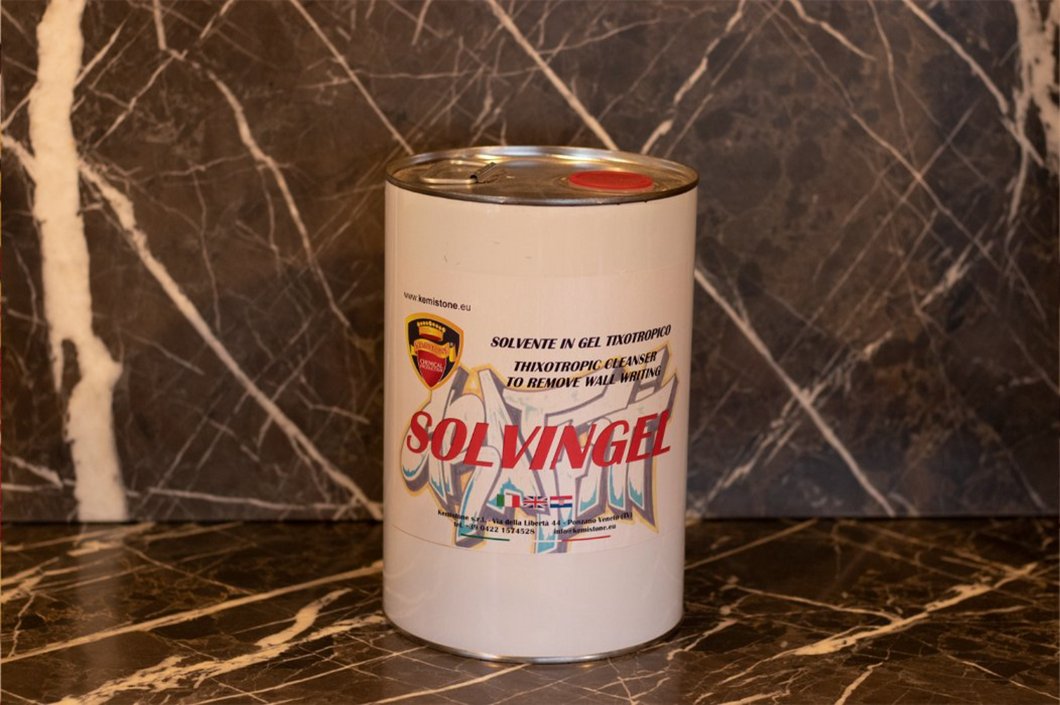
A gel or thixotropic solvent is well suited to graffiti on stone, as the gel can cling to vertical walls rather than running off. Avoid caustic cleaners, wire brushes and steel wool on polished surfaces, they scratch, and scratches trap future dirt. Pressure washing is not a universal fix either; a stone restoration source on graffiti removal warns that high-pressure cleaning can be ineffective on softer stone and can drive pigment deeper. Our anti graffiti removal range includes products for porous surfaces; if you plan to protect afterwards, check whether anti-graffiti coating changes stone colour first.
Step-by-Step: Remove Spray Paint from Stone
What you'll need: gel graffiti remover, stiff nylon brush, soft-bristled brush, warm water, cloths, PPE, and a water container for runoff.
- Protect yourself and the area. Gloves, eye protection and ventilation are not optional with solvents. Mask drains and collect runoff; solvent and paint residue must not enter watercourses.
- Apply liberally. Brush the gel on thick, working it into pores and crevices. Do not scrub yet.
- Allow it to activate. Leave it for the time stated on the label. Rushing this step is why most attempts fail.
- Scrub with a nylon brush. Work in small circles, then rinse with warm water.
- Repeat on stubborn marks. Two gentle passes beat one aggressive one.
Watch out: leaving solvent on too long on a sensitive stone can dull the finish, so check the test patch as you go. Finish with a suitable natural stone cleaner; for deeper marks, our guide to removing rust stains from marble and natural stone explains poulticing, and once the surface is clean and dry, resealing natural stone restores protection.
Here is the removal process at a glance, from protection through repeat passes.
| Step | What to do | Key detail |
|---|---|---|
| 1 | Protect yourself and the area | Gloves, eye protection, ventilation; mask drains, collect runoff |
| 2 | Apply liberally | Brush gel on thick, work into pores and crevices; do not scrub yet |
| 3 | Allow it to activate | Leave for the time stated on the label |
| 4 | Scrub with a nylon brush | Work in small circles, then rinse with warm water |
| 5 | Repeat on stubborn marks | Two gentle passes beat one aggressive one |
Graffiti on stone is a race against absorption, and the wrong product costs you the surface. Kemistone manufactures professional-grade removers and protectors using the highest quality raw materials, with the highest concentration available, so a little goes further. Our team will advise on which product suits your stone, and our anti-graffiti protector creates an invisible barrier against future attacks. Get started with Kemistone and protect your stone before the next tag appears.
Frequently Asked Questions
How do you remove graffiti from natural stone?
Start by identifying the stone type and testing a small patch. Apply a suitable graffiti remover for natural stone, such as Solvigel, with a brush, allow it to activate, then scrub and rinse. For porous surfaces, work the product into pores and crevices. Always use PPE and avoid high-pressure washing on softer stone.
Can you use a pressure washer to remove graffiti from stone?
Pressure washing can be problematic or ineffective on stone, especially softer or historic masonry. It may drive paint deeper into pores or damage the surface. Use a chemical remover with a brush instead, and only consider low-pressure rinsing after treatment.
Should you test graffiti remover on a small area first?
Yes. Always test on an inconspicuous area to check for surface damage or discolouration. Apply a small amount, wait, then rinse. This is especially important on porous or heritage stone. If unsure, call Kemistone for advice before treating the whole area.
