
Quick Summary
Yes, an anti-graffiti coating can change stone colour, but the effect depends on the product, the coating type and the stone itself. Some coatings barely alter appearance, while clear two-pack coatings are more likely to add a visible sheen or deepen the tone. Testing a small patch before treating the full surface is the practical way to check.
- Clear two-pack coatings are the most likely to change how stone looks.
- A 2017 PLOS ONE study found the coatings it tested did not significantly modify stone colour or gloss.
- Apply a small patch in an inconspicuous area and let it dry fully before judging.
- Check the patch in both dry and wet conditions, under diffuse daylight and raking light.
- Re-check the patch after several days; if the tone returns near its original shade, the change was temporary.
Table of Contents
- Short Answer: Does Anti-Graffiti Coating Change Stone Colour?
- How Stone Porosity Affects Colour Change
- Sacrificial vs Permanent Anti-Graffiti Coating: How Each Changes Appearance
- Does Stone Sealer Darken Stone, and Does It Matter for Anti-Graffiti?
- How to Run an Anti-Graffiti Coating Colour Change Test
- Breathable Coating for Stone: Why Vapour Transport Matters
- Booking a Test Patch Before You Treat Your Stone
- Frequently Asked Questions
Short Answer: Does Anti-Graffiti Coating Change Stone Colour?
Last Updated: November 19, 2026
Yes, an anti-graffiti coating can change stone colour, but how much depends on the product, the coating type and the stone itself. The question often comes up among restoration professionals and homeowners who want graffiti protection without losing the natural look of their stone. The honest answer is that some coatings barely alter appearance, while others add a visible sheen or deepen the tone.
Clear two-pack coatings are the most likely to change how stone looks. Dulux Protective Coatings' guidance on anti-graffiti coatings notes that these coatings can add a distinct gloss and slightly darken some substrates, including concrete and bluestone. A 2017 study in PLOS ONE research on anti-graffiti coating durability reported that the coatings it tested did not significantly modify stone colour or gloss. That result applies only to the coatings and stones tested, so it does not prove every product is visually neutral.
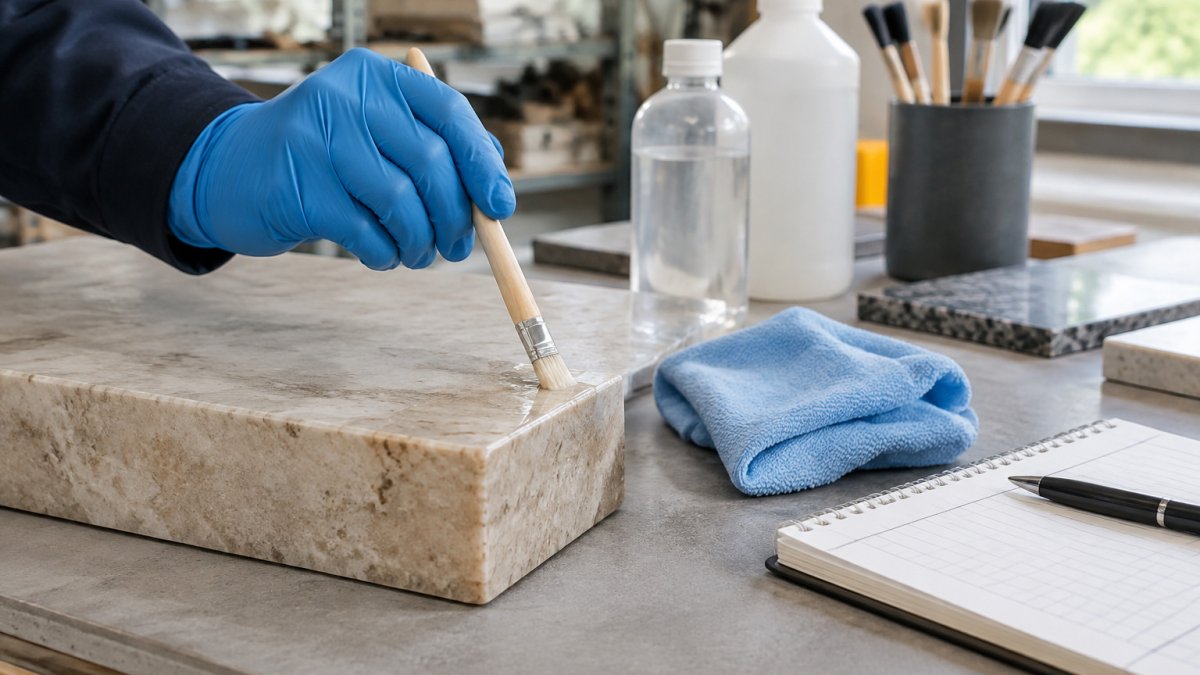
The practical takeaway is simple: test before you treat. Apply a small patch in an inconspicuous area, let it dry fully, and check the colour and sheen in both dry and wet conditions. For step-by-step guidance on applying and checking sealers on stone, see how to seal a granite worktop.
How Stone Porosity Affects Colour Change
Porosity controls how much a coating soaks in and how much it changes what you see. A dense stone with low porosity holds a coating on its surface, so any gloss or tone shift tends to stay visible. A porous stone takes in more of the product, which can soften the effect but may also cause darkening in some areas.
Limestone and sandstone are generally more porous than granite. That means their colour response can vary more from one piece to the next. Granite, with its tighter structure, often shows the clearest difference on the surface itself.
Check porosity before choosing a product. Water droplets that soak in quickly point to high porosity. Droplets that bead on the surface suggest a denser stone that will show coating effects more readily.
Sacrificial vs Permanent Anti-Graffiti Coating: How Each Changes Appearance
Sacrificial and permanent coatings behave differently, and that difference matters for appearance. A sacrificial coating is designed to be removed along with the graffiti, so it is applied as a thin, temporary layer. Because it is meant to wear away, it usually causes less lasting change to colour. A permanent coating bonds more firmly and stays in place through repeated cleaning.
The distinction is not just chemical, it changes what you should expect to see on the stone. A sacrificial coating is generally thin, so its visibility on porous stone and on dense stone can differ, and gloss can be easier to spot under raking light. A permanent coating may penetrate and deepen the tone on porous stone, or form a more distinct film on dense stone.
Curing matters as much as the product type. Coatings can look different while wet than once fully cured, so the test patch should be assessed after full cure, not immediately after application.
Removal is where the two diverge most for appearance. Removal methods differ between coating types, and the way a coating is removed can affect the final appearance of the stone, so the removal approach should be considered alongside the coating choice.
If you want to explore the options, you can browse our anti graffiti range to see what is available for different surfaces.
The two coating types differ in how they affect the stone's look, as summarised below.
| Coating type | Typical appearance effect | Key difference |
|---|---|---|
| Sacrificial | Less lasting colour change | Thin, temporary layer removed with graffiti |
| Permanent | May deepen tone or add gloss | Bonds firmly and stays through cleaning |
| Clear two-pack | Can add distinct gloss, slightly darken | Most likely to change how stone looks |
Does Stone Sealer Darken Stone, and Does It Matter for Anti-Graffiti?
Stone sealers and anti-graffiti coatings are not the same product, but both can change how stone looks. Many sealers can deepen the colour of natural stone, an effect often called the "wet look."
Whether it matters depends on what you need. If you only want water resistance, a slight darkening may be acceptable. If you are protecting a feature where colour must stay true, you should compare finishes carefully before committing. You can look at our stone sealer products to compare their finishes side by side.
Temporary Darkening vs Permanent Colour Change
Temporary darkening usually fades as the stone dries fully or as the coating weathers. Permanent colour change tends to remain. A simple way to tell them apart is to re-check the test patch after several days of normal conditions. If the tone returns close to its original shade, the change was likely temporary.
How to Run an Anti-Graffiti Coating Colour Change Test
A colour change test takes a little time but can prevent costly mistakes. The aim is not just to see whether the stone looks different, but to decide whether any difference is acceptable for that particular surface. Follow these steps:
- Choose a hidden area, such as the underside of a worktop, a low corner of a wall, or a spare offcut of the same stone if one is available.
- Clean the surface with a neutral cleaner and let it dry completely. Moisture left in the stone will distort the result.
- Photograph the untreated area in consistent light, ideally daylight from the same direction at the same time of day.
- Apply the coating to a small patch following the manufacturer's instructions, keeping the film thickness representative of a full application.
- Let the patch cure fully before judging the result, typically 24 to 72 hours depending on the product and conditions.
- Compare the treated and untreated areas in both dry and wet conditions, and under both diffuse daylight and raking light.
- Note any gloss, darkening or uneven absorption, and record the date and conditions.
Record your findings so you can make a clear decision before treating the full surface.
Distinguishing temporary darkening from permanent colour change
Darkening immediately after application can be a temporary wet-look effect that may recede as the coating cures and the stone dries fully. Permanent colour change remains after full cure and after the stone has been through a normal wet-and-dry cycle. Re-check the patch after several days of normal conditions. If the tone has returned close to the original shade, the change was likely temporary. If it has not, treat it as a lasting shift and decide whether it is acceptable.
Lighting and viewing conditions
Colour judgements are only as good as the light you make them in. Diffuse daylight shows overall tone, while raking light, light at a low angle across the surface, can reveal gloss and sheen that a straight-on view may hide. Check the patch under both where possible. If the stone is in a fixed location, view it from the angle people will actually see it from, not just from directly above.
Simple acceptance criteria
You do not need laboratory equipment to make a sensible decision. A practical check is to compare the treated and untreated areas side by side and ask three questions: is the tone shift visible from a normal viewing distance, is there a gloss or sheen where the stone was previously matt, and is the change even across the patch or patchy? If the answer to all three is no, the coating is visually unobtrusive for that stone. If any answer is yes, decide whether that is acceptable for the location, a slight sheen on a utility wall may be fine, while the same sheen on a visible feature is not. For larger or historic projects, a qualified stone conservator can advise on whether coating is appropriate.
!Gloved hand applying a test patch of clear coating to a corner of a natural stone slab in a bright workshop
Breathable Coating for Stone: Why Vapour Transport Matters
Stone needs to release moisture. A coating that traps water inside can cause blistering, flaking or staining over time. This is why vapour transport matters as much as appearance. Breathable coatings allow moisture to escape while still resisting graffiti.
Ask suppliers for information on vapour permeability before you choose a product, especially for exterior stone and historic masonry. Treatments that block vapour completely can cause problems that only appear after a few seasons.
Booking a Test Patch Before You Treat Your Stone
Before treating a full surface, book a test patch with a professional or run one yourself. A patch shows how your specific stone reacts, which general product guidance cannot tell you. If the result looks right, you can proceed with confidence. If it does not, you have avoided a costly mistake.
For larger or historic projects, professional advice is worth the cost. Our article on when professional stone sealing is worth the cost explains how to judge whether that investment makes sense for your situation.
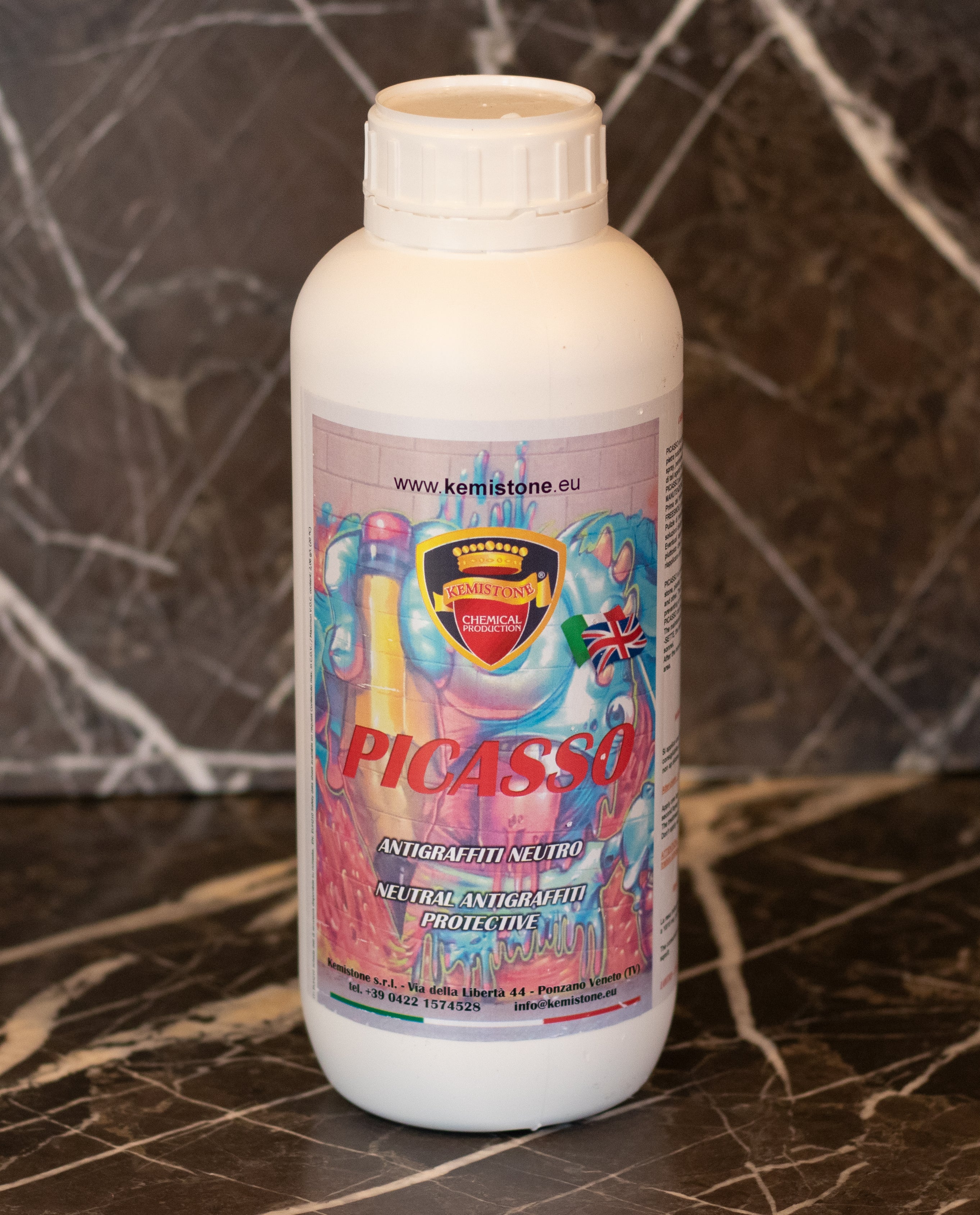
Our Picasso anti-graffiti protector (£64.00) creates an invisible barrier designed for marble, granite, natural stone, plaster and normal concrete, protecting against graffiti and stains caused by sprays, markers and paints. When graffiti needs removing, our Solvigel cleaner (£80.00) can be used on stone surfaces, and our Solv/ics solvent cleaner (£52.50) removes excesses of sealer and stain-removal treatments. Read the instructions carefully before use, and if in doubt, call Kemistone for help.
Ready to protect your stone without guessing? Start with a test patch, then choose the right coating for your surface. Shop Picasso anti-graffiti protection and see how it performs on your stone.
Frequently Asked Questions
Does anti-graffiti coating change the colour of natural stone?
It can. Some tested coatings have been reported not to significantly modify colour or gloss, but clear two-pack coatings can add sheen and slightly darken some substrates such as bluestone. The effect depends on the specific product, the stone's porosity and the coating thickness, so the only reliable answer for your stone is a patch test on an inconspicuous area before full application.
Can a breathable coating for stone still be used with anti-graffiti protection?
Breathability matters most on historic or porous masonry, where trapped moisture can cause damage. Before choosing a product, check its technical data sheet for vapour permeability and ask the supplier how the coating behaves when the stone is damp. A coating that blocks vapour transport can shift moisture problems elsewhere in the wall, so it should be matched to the stone rather than assumed to be suitable.
Does anti-graffiti coating yellow over time?
Yellowing or discolouration over time depends on the coating chemistry and UV exposure. Weathering performance can vary between products, so ask for weathering test data for the specific product. Where a product is claimed to stay clear, check that claim against weathering results rather than relying on general statements.
Does stone sealer darken stone in the same way as anti-graffiti coating?
Sealers and anti-graffiti coatings can both darken stone or add sheen, because both change how light interacts with the surface. Darkening is most noticeable on wet or porous stone and often fades as the surface dries. Permanent colour change is different and should show up in a dry patch test after a full curing period. Test each product separately on the same stone before deciding.
