
Last Updated: October 30, 2026
Quick Summary
To protect limestone floors, clean regularly with a pH-neutral stone cleaner, seal the stone with a suitable sealer, and add anti-slip treatment where needed. Limestone is porous, so sealing and fast spill cleanup stop liquids from soaking in and staining the surface.
- Sweep or vacuum daily in kitchens, hallways and utility rooms to remove grit.
- Damp mop weekly with a pH-neutral cleaner, wringing the mop until only slightly damp.
- Test sealer by dropping water on the floor; if it soaks in within minutes, reseal.
- Avoid vinegar, lemon juice, bleach and other acidic or abrasive products, which can etch limestone.
Table of Contents
- Why Limestone Floors Need Protection
- Step 1: Set Up Routine Cleaning With the Right Tools
- Step 2: Seal Limestone Tiles and Floors Correctly
- Step 3: Add Anti-Slip Treatment and Entrance Protection
- Step 4: Respond to Spills, Stains and Etching Quickly
- Booking Your Next Sealing and Protection Session
- Frequently Asked Questions
Why Limestone Floors Need Protection
Limestone is a porous natural stone. That means it soaks up liquids, dirt and oils if nothing stops it.
Protection works on three fronts. First, a good routine clean removes grit before it scratches the surface. Second, a quality sealer reduces how much liquid the stone absorbs. Third, the right anti-slip treatment keeps the floor safe underfoot.
Many homeowners assume a shiny floor is a protected floor. It often isn't. Polish and wax can hide wear while leaving the stone open to staining.
Watch out: using a harsh or acidic cleaner on limestone can etch the surface in a single application. Always check the label first.
Step 1: Set Up Routine Cleaning With the Right Tools
Good cleaning starts with the right kit and a schedule you can actually keep. Keep a soft broom, a vacuum with a hard-floor head and a brush attachment, a microfibre mop, and two buckets. One bucket holds clean water.
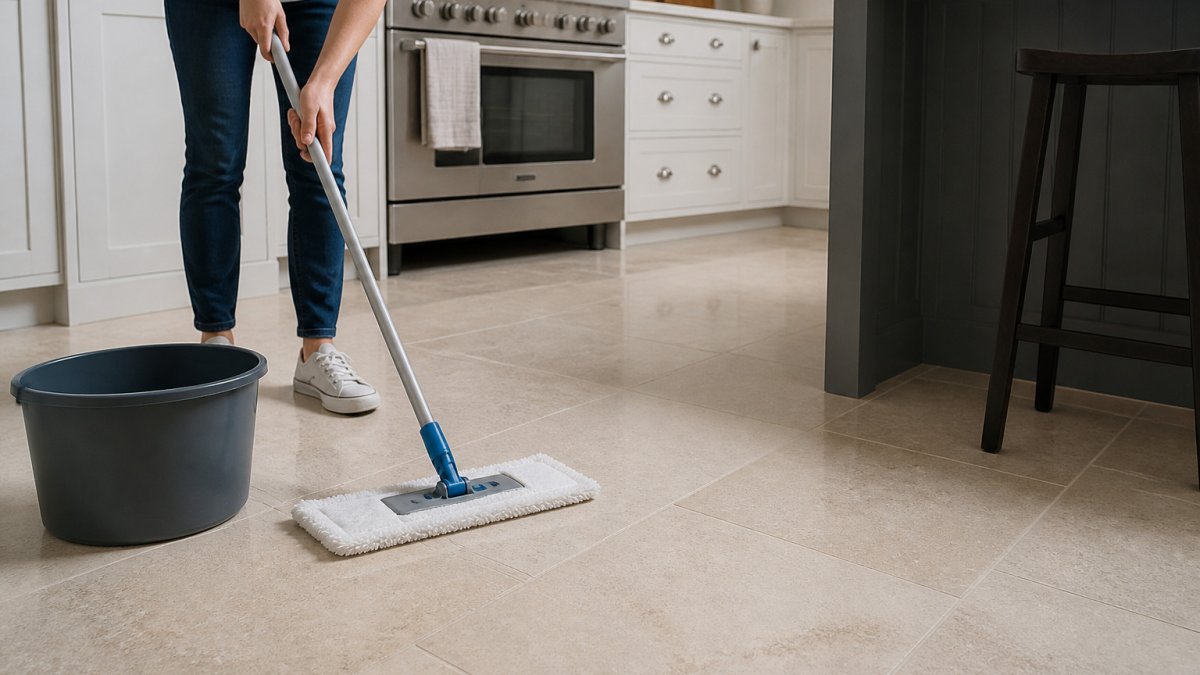
[Photo: a homeowner damp mopping a pale limestone kitchen floor with a soft microfibre mop and a bucket of cleaner nearby]
A Practical Cleaning Schedule by Floor Use
How often you clean depends on where the floor is and how much traffic it sees. Use this as a starting point and adjust for pets, children, and garden access.
- Daily (kitchens, hallways, utility rooms): Sweep or vacuum to remove grit. Grit acts like sandpaper under foot traffic, so removing it matters more than almost anything else you do.
- Twice weekly (living rooms, bedrooms): Sweep or vacuum, then damp mop with a pH-neutral cleaner.
- Weekly (all areas): Damp mop with a pH-neutral cleaner. Wring the mop until it is only slightly damp. Too much water can soak into the stone and leave marks.
Sweeping, Vacuuming and Damp Mopping
Sweep or vacuum before you mop. Use a soft, clean microfibre mop head and change the water often so dirt doesn't spread. Let the floor dry fully before walking on it. On honed and polished limestone, a dry microfibre pad after damp mopping helps remove streaks. On tumbled or textured finishes, a soft brush attachment lifts dirt from the surface pits without scratching.
- Sweep or vacuum before you mop
- Use a soft, clean microfibre mop head
- Change the water often so dirt doesn't spread
Choosing a pH-Neutral Cleaner
Pick a cleaner labelled pH-neutral. You can browse the full range of natural stone cleaners designed to clean and maintain natural stone. Piaccasette Stone Soap from Kemistone is a pH 7 concentrated cleaner made for natural stone. It cleans without harming the surface and leaves a uniform, satin finish.
Avoid vinegar, lemon juice, bleach and other acidic or abrasive products. They can dull or etch limestone, even when diluted.
Finish-Specific Cleaning Notes
Limestone finishes behave differently under a mop. Honed and polished surfaces show streaks and water marks more readily, so use less water and buff dry. Tumbled and textured finishes trap dirt in their surface variation, so vacuum with a brush attachment and use a soft brush on grout lines.
The article sets out how often to clean by floor use, which makes the schedule easy to scan.
| Floor use | Cleaning frequency | Method |
|---|---|---|
| Kitchens, hallways, utility rooms | Daily | Sweep or vacuum to remove grit |
| Living rooms, bedrooms | Twice weekly | Sweep or vacuum, then damp mop |
| All areas | Weekly | Damp mop with pH-neutral cleaner |
| All areas | Monthly | Vacuum entrance mats, inspect high-traffic zones |
| All areas | Annually or per water test | Review sealer, plan resealing, deep-clean grout |
Step 2: Seal Limestone Tiles and Floors Correctly
Sealing reduces how much liquid limestone absorbs, which helps protect limestone floors. Spills then sit on the surface long enough to wipe up, rather than soaking in and leaving a stain.
Clean and dry the floor fully before sealing. Any dirt trapped under the sealer will show. Apply thin, even coats with a brush or applicator, and allow each coat to dry before adding the next.
Choosing a Limestone Floor Sealer
Choose a sealer that suits how absorbent your stone is. Kingstone Plus from Kemistone is an oil-repellent, water-based sealer designed for stone with medium to high absorbance, including limestone. Kingstone Plus is listed with full product details.

Kingstone is a solvent-based option that gives both water and oil repellence. Its coverage is also 10-15 sqm per litre. Both are sold through the Kemistone shop, where Kingstone Plus is listed at £215.00 and Kingstone at £44.00.
Testing Whether Your Limestone Needs Resealing
Sealer wears off with foot traffic and cleaning. A simple water test shows whether it is still working. Drop a few drops of water on a clean, dry area of floor. If the water beads up, the sealer is intact. If it soaks in within a few minutes and darkens the stone, it is time to reseal.
Test a few spots across the room, especially high-traffic areas by doors and in kitchens.
Step 3: Add Anti-Slip Treatment and Entrance Protection
Limestone can be slippery when wet, especially polished finishes. An anti-slip treatment adds grip without changing the look of the floor. You can see the anti-slip treatments available for limestone.
Entrance protection cuts down how much grit reaches the floor in the first place. Place a durable entrance mat at each outside door and clean it regularly. Mats trap sand and dirt before it can scratch the stone.
- Apply anti-slip treatment before your final sealing coat
- Use mats at every external door
- Shake or vacuum mats weekly
Step 4: Respond to Spills, Stains and Etching Quickly
Speed matters most with spills. Wipe up liquids as soon as you see them, especially wine, juice, oil and coffee. Blot rather than rub, so the liquid doesn't spread. Keep a colourless microfibre cloth and a pH-neutral cleaner within reach in kitchens and utility areas.
Spill-Specific Stain Response
Different spills need different handling. Use the method below, and always test on a hidden area first.
- Oil and grease: Blot up what you can, then apply a pH-neutral stone cleaner and leave it for a few minutes before wiping. For set oil marks, a poultice made from a pH-neutral powder and water can draw the oil out over 24-48 hours. Avoid acidic or solvent-heavy cleaners unless the sealer manufacturer confirms they are suitable.
- Wine, coffee and tea: Blot immediately, then clean with a pH-neutral cleaner. If a mark remains, a poultice can help lift the stain. Do not use bleach or vinegar, which can etch the surface.
- Rust: Rust marks often come from metal furniture or plant pots. Wipe up any moisture, clean with a pH-neutral product, and consider a proprietary stone poultice designed for rust. Prevent recurrence by using felt pads under metal legs and saucers under pots.
Testing Whether a Stain Has Set
After cleaning, let the area dry fully. If the mark disappears when dry, it was surface soil. If it remains visible when dry, it has penetrated and may need a poultice or professional attention. A simple water-drop test on the stained area also shows whether the sealer is still working there: if water soaks in quickly, the sealer has worn and the stain has had a route into the stone.
Dealing With Etching
Etching looks like a dull, rough patch and is usually caused by an acidic spill or cleaner. Harsh products can make etching worse, so if you are unsure, seek professional advice rather than experimenting.
Booking Your Next Sealing and Protection Session
Protecting limestone floors comes down to four habits: clean regularly with a pH-neutral product, seal with a suitable sealer, add anti-slip where needed, and respond fast to spills. Reseal when your water test shows the sealer has worn.
If you're ready to protect your floor, browse Kemistone's range of sealers, cleaners and anti-slip treatments. Start with Kingstone Plus for a water-based, oil-repellent seal, or pick up Piaccasette for everyday cleaning.
Frequently Asked Questions
Do you need to seal limestone floor tiles?
Yes, in most cases. Limestone is porous, so it absorbs water, oil and dirt, which leads to staining and darkening over time. A penetrating sealer reduces absorption without changing the look of the stone. Before sealing, test a small area and allow the stone to dry fully. Sealing is most important in kitchens, hallways and bathrooms, where spills are common. Kingstone Plus is a water-based option designed for stones with medium to high absorption, while Kingstone is a solvent-based option that provides water and oil repellence.
How often should limestone floors be resealed?
Reseal when the stone stops beating water. Drop a few drops of water on the floor; if it soaks in within a few minutes instead of beading, the sealer has worn away. In high-traffic areas this may be every one to two years, while lightly used floors may last longer. Keep a note of when you last sealed the floor so you can check it on schedule. Always clean the floor thoroughly before resealing so the new coat bonds properly.
Can you use vinegar or other acidic cleaners on limestone?
No. Vinegar, lemon juice and other acidic cleaners react with the calcium carbonate in limestone, which can etch the surface and dull its finish. Use a pH-neutral stone cleaner instead, such as Piaccasette Stone Soap, which is formulated at pH 7 and suits sealed stone. Avoid abrasive scourers and harsh chemical cleaners as well, since they can scratch polished surfaces and damage sealer.
How can you reduce slipping on a limestone floor?
Polished limestone can become slippery when wet, so an anti-slip treatment or a suitable finish helps. Clean the floor thoroughly, remove any residue, and then apply a suitable treatment in line with the manufacturer's instructions. Entrance mats also reduce grit and moisture being carried onto the floor, which helps keep the surface safer and less worn. Test any treatment on an inconspicuous area first.
