
Last Updated: November 2, 2026
Quick Summary
Professional grade stone sealer is worth buying when your stone is porous enough to absorb a spill, because it lines the pores near the surface to resist water- and oil-borne staining. It does not make stone stainproof, scratchproof or acidproof; it slows absorption and buys time to wipe spills before they set.
- Match the stone sealer to the stone's absorption rate first and its finish second.
- Sealing over trapped moisture, dust or a previous acrylic coating is the most common reason a treatment disappoints within a season.
- Choose solvent-based for maximum penetration and fast cure, water-based for lower odour and porous stone.
- Apply thin, even coats and wipe off excess before it dries to avoid a patchy, tacky finish.
- Check external paving annually before winter and interior worktops every 12-24 months depending on use.
Table of Contents
- What Professional Grade Stone Sealer Actually Does (And What It Doesn't)
- Choosing a Natural Stone Sealer by Stone Type and Finish
- Why a Sandstone Sealer Needs a Different Formulation
- Solvent-Based vs Water-Based Stone Sealer: Which to Buy
- Stone Sealer Application: Preparation, Coverage and Curing
- Ordering Your Kemistone Sealer: Matching Product to Surface
- Frequently Asked Questions
What Professional Grade Stone Sealer Actually Does (And What It Doesn't)
Professional grade stone sealer protects absorbent natural stone from water- and oil-borne staining by lining the pores near the surface, and it is worth buying when the stone is porous enough to absorb a spill. At Kemistone, we build our sealers around that single job.
Below, we will show you exactly how to match a sealer to your stone, your finish and your site conditions, and what most buying guides get wrong about coverage and cure times.
One industry forecast puts the natural stone sealer market growing from USD 1.2 billion in 2024 to USD 1.99 billion by 2033 at a 6.5% compound annual rate, according to a natural stone sealer market analysis published forecast. Growth in the category has not made the products interchangeable, though. A sealer formulated for dense granite will sit on the surface of sandstone and do very little.
Here is the practical split:
- What a penetrating sealer does: reduces water and oil absorption, helps resist staining, keeps the stone breathable, and leaves the colour and texture unchanged.
- What it does not do: stop etching from acids, prevent scratches, replace a physical barrier against abrasion, or make a polished surface more slip-resistant.
- What a topical coating does: builds a film on the surface, adds sheen, and can wear through in high-traffic areas.
A failed sealer is usually a preparation failure, not a product failure. Sealing over trapped moisture, dust or a previous acrylic coating is the most common reason a treatment disappoints within a season.
Choosing a Natural Stone Sealer by Stone Type and Finish
Match the sealer to the stone's absorption rate first and its finish second, because porosity decides how much product the stone takes and how deep it penetrates. Marble, limestone and sandstone are typically more absorbent than granite or quartzite, so they need a formulation for medium to high absorption. A polished surface sheds liquid on its own, while a honed or natural finish opens the pores and takes a penetrating sealer readily.
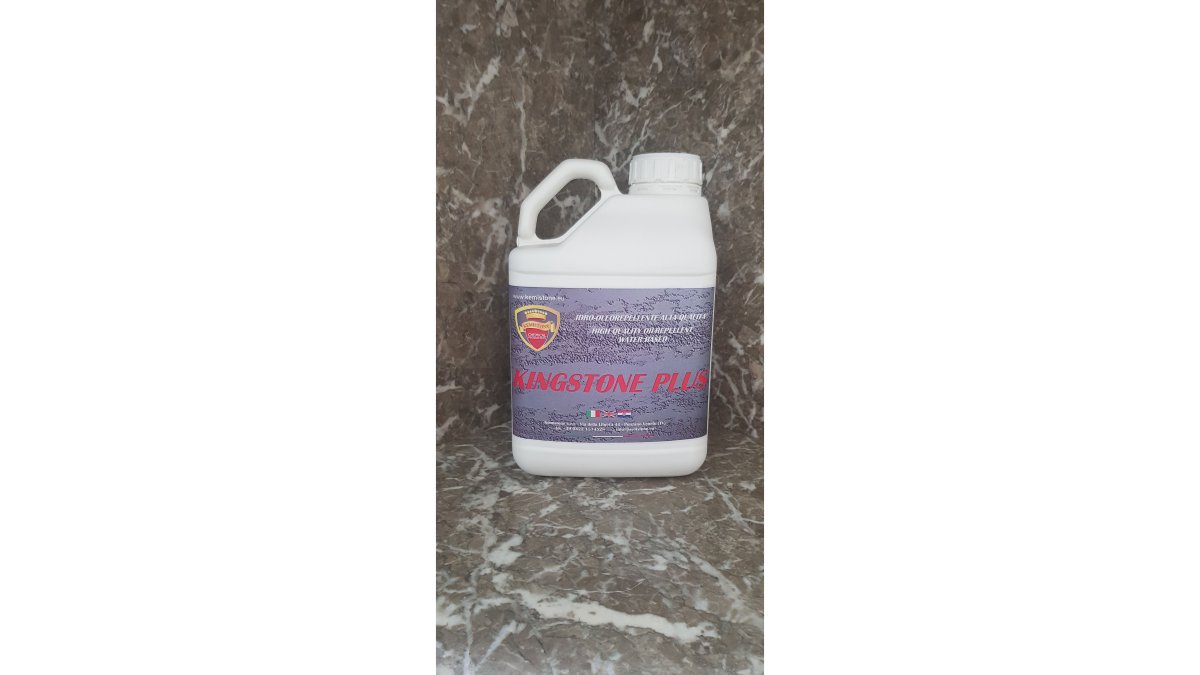
For absorbent stones, our Kingstone Plus is an oil-repellent, water-based sealer designed for marble, granite, quartzites, limestones and sandstones with medium to high absorption, leaving colour and surface features unchanged. For marble specifically, marble sealer needs to protect against both water and oil without altering the polish, which is where a neutral, invisible finish matters. Our high quality sealers collection sets out each product against the material it suits.
A common mistake is buying one can for a mixed schedule of marble worktops, limestone floors and granite steps. Check absorption on a small offcut for each material before you commit.
Why a Sandstone Sealer Needs a Different Formulation
Sandstone sealer has to cope with a genuinely porous, often highly absorbent stone, frequently installed outdoors where it faces rain, frost and organic growth. A formulation that works on dense polished granite will often sit on top of sandstone rather than soak in, leaving it vulnerable to lifting and re-soiling. Sandstone wants a penetrating sealer that lines the pore structure, not a film that sits on the face.
Outdoor stone brings a second problem: damp, shaded paving grows moss and lichen, and a sealer applied over organic growth seals the problem in. Clean first, let the stone dry properly, then seal. Water-repellent treatments reduce water uptake on porous stone.
Watch out: sealing damp sandstone traps moisture under the treatment and can lead to spalling and surface loss over a winter. Test dryness before you start.
Solvent-Based vs Water-Based Stone Sealer: Which to Buy
Choose a solvent-based sealer for maximum penetration and fast cure on a dry, well-ventilated site, and water-based for lower odour, easier clean-up and medium-to-high absorption stone.
Breathability. Penetrating sealers of both types leave the stone vapour-permeable, which matters on floors, paving and any stone that takes up moisture from below. A topical film-forming coating is the type that can trap moisture.
Finish and appearance. Both carriers come in natural-finish and colour-enhancing versions. A natural-finish impregnator should leave colour and texture unchanged; an enhancing product deepens colour and is a deliberate aesthetic choice. Confirm which you are buying, because the same brand often sells both under similar names.
Drying, cure and recoat windows.
Odour, ventilation and occupied buildings.
Cost in use, not just cost per can. Compare products on coverage as well as price. A sealer covering 20-25 sqm per litre can be better value than a cheaper can covering 10-15 sqm per litre. Work out litres needed for the job, then compare total cost.
| Criterion | Solvent-Based | Water-Based |
|---|---|---|
| Best for | Dense, low-absorption stone; fast programmes | Porous, medium-high absorption stone; occupied interiors |
| Penetration behaviour | Wets out tight stone readily | Formulated to penetrate absorbent stone |
| Cure speed | Fast | Slower; plan recoat and traffic windows |
| Odour and fumes | Stronger; ventilate well and use PPE | Low |
| Breathability | Penetrating grades remain vapour-permeable | Penetrating grades remain vapour-permeable |
| Typical use | Worktops, granite, cladding | Marble, limestone, sandstone floors |
| Kemistone example | Jackstone, £165.00 | Kingstone Plus, £215.00 |
Whichever you buy, the deciding factor is absorption, not brand loyalty. Test on an offcut if you are unsure.
Stone Sealer Application: Preparation, Coverage and Curing
Stone sealer application comes down to four stages: clean and dry the stone, test on a small area, apply thin, even coats at the correct coverage rate, and let it cure fully before traffic. Get the preparation right and most sealers perform; skip it and even a professional-grade product underperforms.
Step 2: Clean thoroughly. Remove all dust, mortar residue, oils, moss, lichen and any previous coating.

Step 3: Dry fully. Apply only to dry stone.
Step 4: Mask and protect adjacent surfaces. Mask edges, frames and adjoining materials that should not be sealed.
Step 5: Apply thin, even coats. Use a low-pressure sprayer, roller or brush and work the product into the surface. Apply thin and even rather than flooding.
Step 6: Respect recoat and cure windows. Follow the label for the recoat window and the time before foot traffic or water exposure.
- Measure the area in square metres, including edges and upstands.
- Divide by the lower coverage figure for porous stone, or the higher figure for dense stone.
- Multiply by the number of coats specified on the label.
- Round up to the next whole litre, and add one spare litre for touch-ups.
Step 7: Cure before use. Keep traffic and water off the stone for the full cure time on the label.
Troubleshooting. Over-application is as damaging as under-application: pooling leaves a patchy, tacky surface that attracts dirt.
When to reseal. Reapply when water no longer beads and spills begin to darken the stone quickly.
Safety and environment. Wear gloves and eye protection, ventilate the area, keep pets and children off treated surfaces until fully cured, and prevent runoff entering drains or watercourses. If you are ready to apply, browse our water repellants to match the product to your surface.
Ordering Your Kemistone Sealer: Matching Product to Surface
Ordering the right sealer starts with three facts: the stone type, its absorption rate, and whether it sits indoors or out. Bring those and the range narrows quickly. Our products are engineered through laboratory and practical testing to solve specific stone problems, from hydro-repellent protection to keeping worktops and floors looking like new.
Here is how we would match the range:
- Marble, limestone, sandstone, medium-to-high absorption: Kingstone Plus, water-based, £215.00.
- Marble, limestone, stone composites, solvent route: Kingstone, £44.00, coverage 10-15 sqm per litre.
- Quartzite, granite, terracotta, concrete and alkaline silicate materials: Querz, £44.00, coverage 10-20 sqm per litre.
- Marble or granite worktops, floors and cladding: Jackstone, £165.00, coverage 20-25 sqm per litre.
If you are unsure which product suits your surface, our team can help you match product to stone before you buy. Contact us with your stone type and finish and we will point you to the right sealer.
Frequently Asked Questions
How do I choose the right sealer for natural stone?
Match the sealer to the stone's absorption and finish. Kingstone Plus is designed for marble, granite, quartzites, limestones and sandstones with medium to high absorption, while Querz suits quartzite, granite and terracotta, and Jackstone suits marble and granite worktops, floors and cladding. Always test a small hidden area first. A sealer resists water- and oil-borne staining but does not make stone stainproof, scratchproof or acidproof.
How much stone sealer do I need to buy?
Calculate the area in square metres, then divide by the coverage rate. Kingstone and Kingstone Plus cover 10-15 sqm per litre, Querz covers 10-20 sqm per litre and Jackstone covers 20-25 sqm per litre. Porous stone sits at the low end of those ranges. For example, 40 sqm of sandstone at 10 sqm per litre needs about 4 litres, so buy a little extra for edges and touch-ups.
How long does stone sealer take to dry before foot traffic?
Drying time depends on the product, the stone's porosity and site conditions. Keep the surface dry and free of traffic until the manufacturer's stated curing window has passed.
Will a water-based stone sealer change the look of the stone?
A clear impregnating sealer should leave the surface appearance unchanged. Kingstone Plus is water-based, appears yellow/amber in the container but dries invisible, and is breathable and UV resistant so it will not yellow over time. If you want to deepen colour, that is a separate colour-enhancing product decision.
The real challenge is not finding a sealer; it is matching one to the stone in front of you and applying it properly. Kemistone engineers professional-grade treatments for exactly that job, from hydro-repellent protection to anti-slip and anti-graffiti finishes, using high-quality raw materials backed by laboratory and practical testing. Get started with Kemistone and protect your natural stone with a product matched to its surface.
