
Last Updated: November 12, 2026
Quick Summary
The best anti slip treatment for stone is a microporosity treatment such as Nobriss (£90.00), which acts within the stone to create grip when wet without forming a film or changing the surface's appearance. It suits marble, granite, quartz, porcelain, ceramic and enamel, covering 6 to 15 sq/m per litre, and testing a small area first is recommended.
- Nobriss creates microporosity that grips when wet, forms no film and does not change the physical appearance of the surface.
- Sabbiatore textured acid finishes start from £10.00 and change texture and colour for antique, orange-peel or brushed effects.
- Mechanical finishes such as honed, brushed, sandblasted, flamed and bush-hammered add slip resistance by texture but are specified before installation.
- Surface-film coatings are quick and cheap but wear, dull the stone and need reapplying, while sealers alone add no grip.
- Sabbiatore Antiko yields 3 to 5 sqm per litre on calcium-carbonate-rich stones such as Crema Marfil, travertino and Rosso Verona.
Table of Contents
- What Makes a Stone Anti-Slip Coating the Best Choice
- How to Make Stone Floors Less Slippery: The Options Ranked
- Anti-Slip Treatment for Stone Patios and Marble: Matching the Product to the Surface
- Frequently Asked Questions
What Makes a Stone Anti-Slip Coating the Best Choice
An anti slip treatment for stone is the best choice when it changes how water behaves on the surface without forming a film that wears away. The strongest options work within the stone itself, creating microporosity that grips a wet shoe.
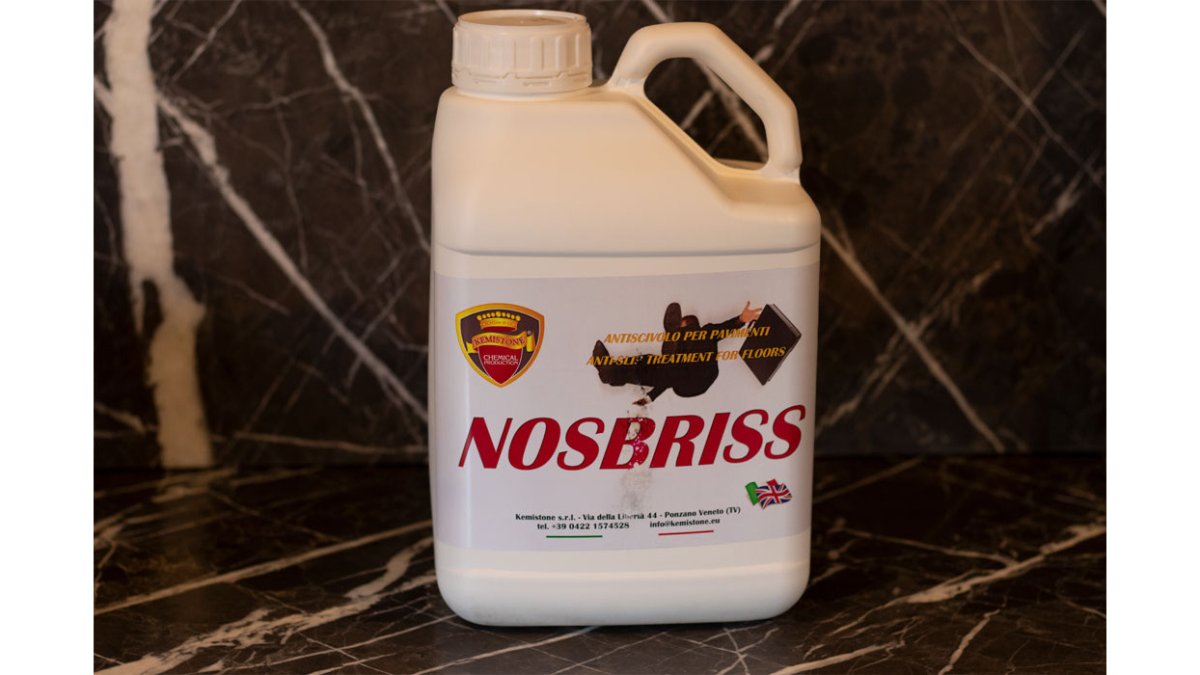
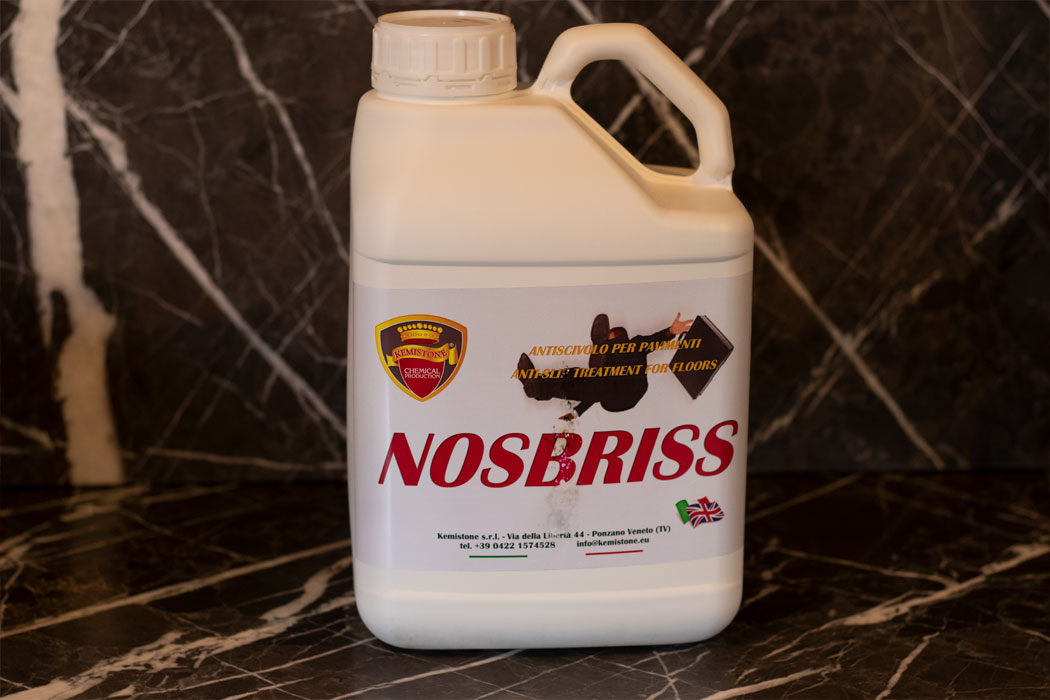
Nobriss acts directly on marble, granite, quartz, porcelain, ceramic and enamel, creating microporosity that grips when wet. It forms no surface film, does not change the physical appearance of the surface, and is designed to give an excellent result with one application, covering 6 to 15 sq/m per litre.
Reaction times vary by stone, so test a small area first.
Surfaces Galore's guide to anti-slip stone finishes makes the case that a textured finish chosen at specification stage can outperform any post-installation treatment. That is fair for new work. For existing floors, a treatment is the practical route.
How to Make Stone Floors Less Slippery: The Options Ranked
- Microporosity treatment (Nobriss, £90.00). Acts on the stone to create grip when wet. No film, and it does not change the physical appearance of the surface. Suitable for marble, granite, quartz, porcelain, ceramic and enamel.
- Textured acid finish (Sabbiatore range, from £10.00). Changes texture and colour for an antique, orange-peel or brushed effect.
- Mechanical finishes. Honed, brushed, sandblasted, flamed and bush-hammered surfaces add slip resistance by texture, but are specified before installation.
- Surface-film coatings. Quick and cheap, but wear, dull the stone and need reapplying.
- Sealers alone. Control moisture and staining but add no grip.
If you want to see the full range before deciding, browse the anti-slip product range or read the application FAQs for curing and coverage questions.
Here are the anti-slip options the article ranks, from in-stone treatments to sealers that add no grip.
| Option | Best for | Key difference |
|---|---|---|
| Microporosity treatment (Nobriss, £90.00) | Marble, granite, quartz, porcelain, ceramic, enamel | Creates grip when wet, no film, no appearance change |
| Textured acid finish (Sabbiatore range, from £10.00) | Antique, orange-peel or brushed effects | Changes texture and colour |
| Mechanical finishes | Honed, brushed, sandblasted, flamed, bush-hammered surfaces | Add slip resistance by texture, specified before installation |
| Surface-film coatings | Quick and cheap grip | Wear, dull the stone and need reapplying |
| Sealers alone | Moisture and stain control | Add no grip |
Anti-Slip Treatment for Stone Patios and Marble: Matching the Product to the Surface
An anti slip treatment for stone patios and marble is not one product. Outdoor paving faces rain, algae and frost, while interior marble faces foot traffic and cleaning. Match the product to the exposure, not to the label. Proper preparation remains essential because applying a treatment over existing grime will only trap debris, a process detailed further in Cotswold Exterior Surface Cleaning.
For patios, porosity and moisture exposure drive the decision: a treatment that grips when wet and resists re-soiling outlasts a film coating. For interior marble, preserving the finish matters as much as grip.
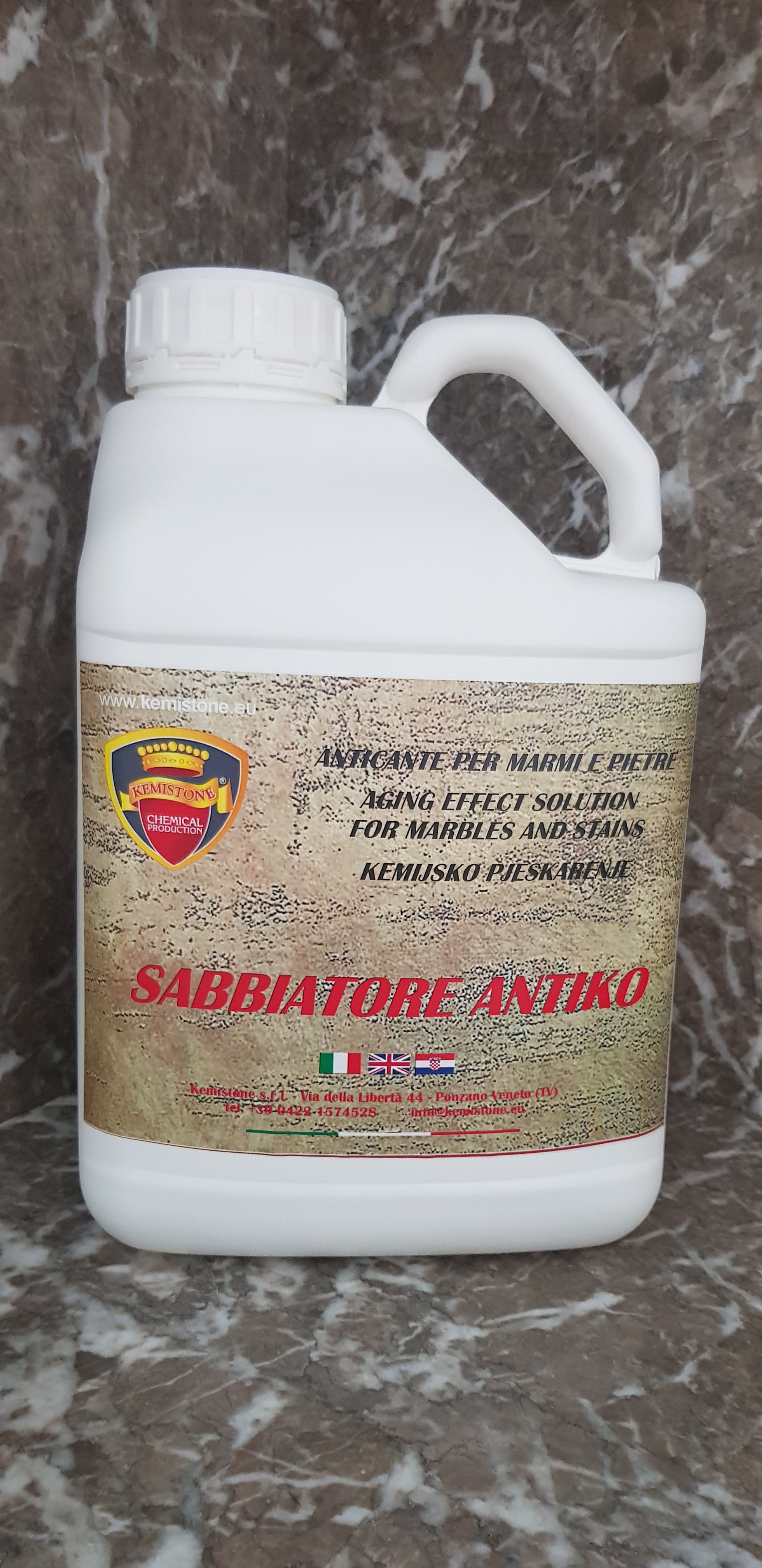
An anti-slip treatment for marble should be tested for reaction time before full application, because calcium-rich stones respond differently. Where a textured, aged look suits the scheme, Sabbiatore Antiko creates an antique effect on calcium-carbonate-rich stones such as Crema Marfil, travertino and Rosso Verona, with a yield of 3 to 5 sqm per litre.
Nobriss is suitable for marble, granite, quartz, porcelain, ceramic and enamel surfaces where there is a risk of slipping.
For the flagship treatment details, see the Nobriss anti-slip treatment, and for outdoor textured finishes, view Sabbiatore Antiko.
Stone that turns slick when wet is a safety hazard. Kemistone supplies professional-grade anti-slip treatments for marble, granite, quartz, porcelain, ceramic and enamel, with coverage from 6 to 15 sq/m per litre. Testing a small area before full application is recommended.
Frequently Asked Questions
What is the best anti-slip treatment for natural stone?
There is no single answer for every stone. For polished marble, granite, quartz, porcelain and ceramic floors, Nobriss works by creating microporosity at the surface so traction improves when the floor is wet, without forming a film. For calcium-rich stones such as travertine and Crema Marfil, a textured finish from the Sabbiatore range changes the surface itself. Match the treatment to the stone type and run a small test first.
Do anti-slip treatments change the appearance of stone?
It depends on the product. Nobriss does not change the physical appearance of the surface, though it can slightly alter the finish. The Sabbiatore range is different by design: Antiko creates an antique effect, Orange an orange-peel texture and Dune a brushed effect, and all three change both texture and colour. If keeping the original look matters, test a hidden area before treating the whole floor.
How long does anti-slip treatment last on stone?
Longevity depends on foot traffic, moisture exposure and maintenance. Nobriss acts directly on the stone surface rather than forming a film. A test on a small area is recommended to check the result on your material.
